Oxygen as Environment: Chlorine Dioxide vs Hyperbaric Oxygen
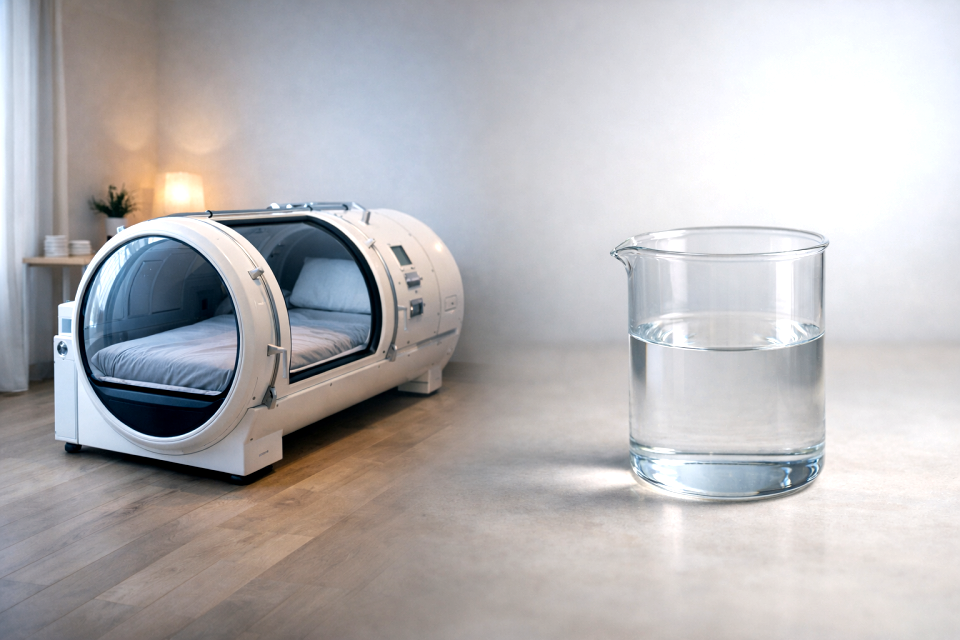
In recent years, two seemingly unrelated health approaches have generated remarkably similar stories of recovery: chlorine dioxide, often discussed for its oxidative properties, and hyperbaric oxygen therapy (HBOT), a pressure-based oxygen saturation technique used in clinical settings. At first glance, these methods appear to occupy opposite ends of the health spectrum—one a decentralized, chemistry-based alternative, the other a facility-based medical intervention. Yet users of both report improvements across a wide range of biological complaints, including infections, chronic inflammation, tissue stagnation, and even parasitic conditions.
This convergence raises an important question:
How can two such different methods produce overlapping results—and what do they reveal about the role of oxygen in biological balance?
Rethinking Oxygen’s Role in Biology
Oxygen is typically framed as either:
- A life-supporting necessity, or
- A source of damaging oxidative stress
In reality, oxygen functions as a context-dependent regulator. Its availability, distribution, and chemical behavior shape which biological processes flourish—and which fail.
Rather than acting as a direct “weapon,” oxygen often works by altering internal conditions, making certain states sustainable and others impossible.
Both chlorine dioxide and hyperbaric oxygen therapy appear to operate within this terrain-based framework.
Chlorine Dioxide: Oxidation as Environmental Pressure
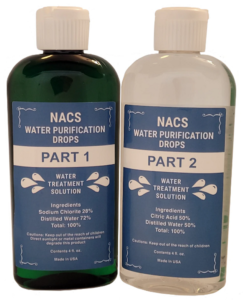
Chlorine dioxide is frequently labeled an oxidizer, but that term alone is incomplete. In practical use, it is often described not as a blunt antimicrobial but as a selective oxidative agent that reacts primarily where abnormal chemistry exists.
Commonly discussed characteristics include:
- Rapid reaction followed by neutral breakdown products
- Activity concentrated in areas of biological waste or imbalance
- Disruption of microbial metabolism rather than indiscriminate tissue damage
Users frequently report effects consistent with:
- Biofilm weakening
- Reduced microbial load
- Improved cellular “cleanliness” and signaling
Importantly, chlorine dioxide does not increase blood oxygen levels. Instead, it alters redox dynamics—the balance between reduction and oxidation—at a localized biochemical level.
Hyperbaric Oxygen Therapy: Oxygen as Physical Saturation
Hyperbaric oxygen therapy takes an entirely different route.
By increasing atmospheric pressure while breathing oxygen, HBOT:
- Dramatically raises dissolved oxygen in blood plasma
- Forces oxygen into tissues that are normally poorly oxygenated
- Reduces hypoxic (low-oxygen) zones
Reported effects often include:
- Enhanced wound healing
- Improved mitochondrial efficiency
- Reduced inflammation
- Increased immune responsiveness
Unlike chlorine dioxide, HBOT does not rely on chemical oxidation. Its impact is mechanical and environmental, reshaping the internal oxygen landscape of the body.
Why Both Approaches May Affect Parasites
One of the most striking overlaps between these methods is their reported effect on parasites and persistent microbial infections.
Many parasites and pathogenic organisms share a critical vulnerability:
they depend on low-oxygen or oxygen-unstable environments.
Some are anaerobic.
Others survive best in hypoxic tissue pockets.
Many rely on biofilms or stagnant environments for protection.
When oxygen dynamics change:
- With chlorine dioxide, oxidative pressure disrupts membranes, enzymes, and biofilms, interfering with parasite survival mechanisms.
- With hyperbaric oxygen, oxygen penetrates protected niches, collapsing anaerobic strategies and enhancing immune surveillance.
In this context, parasites are not “killed by oxygen” in a simplistic sense. Rather, the conditions they require are removed.
Shared Outcomes, Different Pathways
Despite their differences, both approaches often produce similar reports because they:
- Alter the internal biological environment
- Reduce hypoxia and stagnation
- Disrupt microbial shelters and biofilms
- Support immune function indirectly
- Apply pressure to disordered ecosystems rather than targeting symptoms
This helps explain why results may overlap even when mechanisms do not.
Key Differences at a Glance
| Aspect | Chlorine Dioxide | Hyperbaric Oxygen Therapy |
| Primary action | Selective oxidation | Oxygen saturation |
| Scope | Local biochemical | System-wide |
| Delivery | Oral, topical, environmental | Pressurized chamber |
| Accessibility | Decentralized, low cost | Facility-based, high cost |
| Biological pressure | Redox disruption | Hypoxia elimination |
They are not substitutes—but they reflect complementary philosophies.
A Terrain-First View of Healing
Both methods quietly challenge a dominant medical assumption: that healing must always mean attacking a specific target.
Instead, they suggest an older, often overlooked principle:
Change the environment, and biology reorganizes itself.
When the internal terrain shifts—chemically or physically—many pathological processes lose their footing without direct confrontation.
This perspective reframes oxygen not as a drug or toxin, but as a context-shaping influence.
Is It Strange That Oxygen Could Defeat Parasites?
Only if parasites are viewed in isolation.
When seen as organisms dependent on specific internal conditions, the idea becomes not strange at all—but logical.
Oxygen, when applied thoughtfully, may not destroy life.
It may simply restore balance where imbalance has been allowed to persist.
And sometimes, that is enough.